

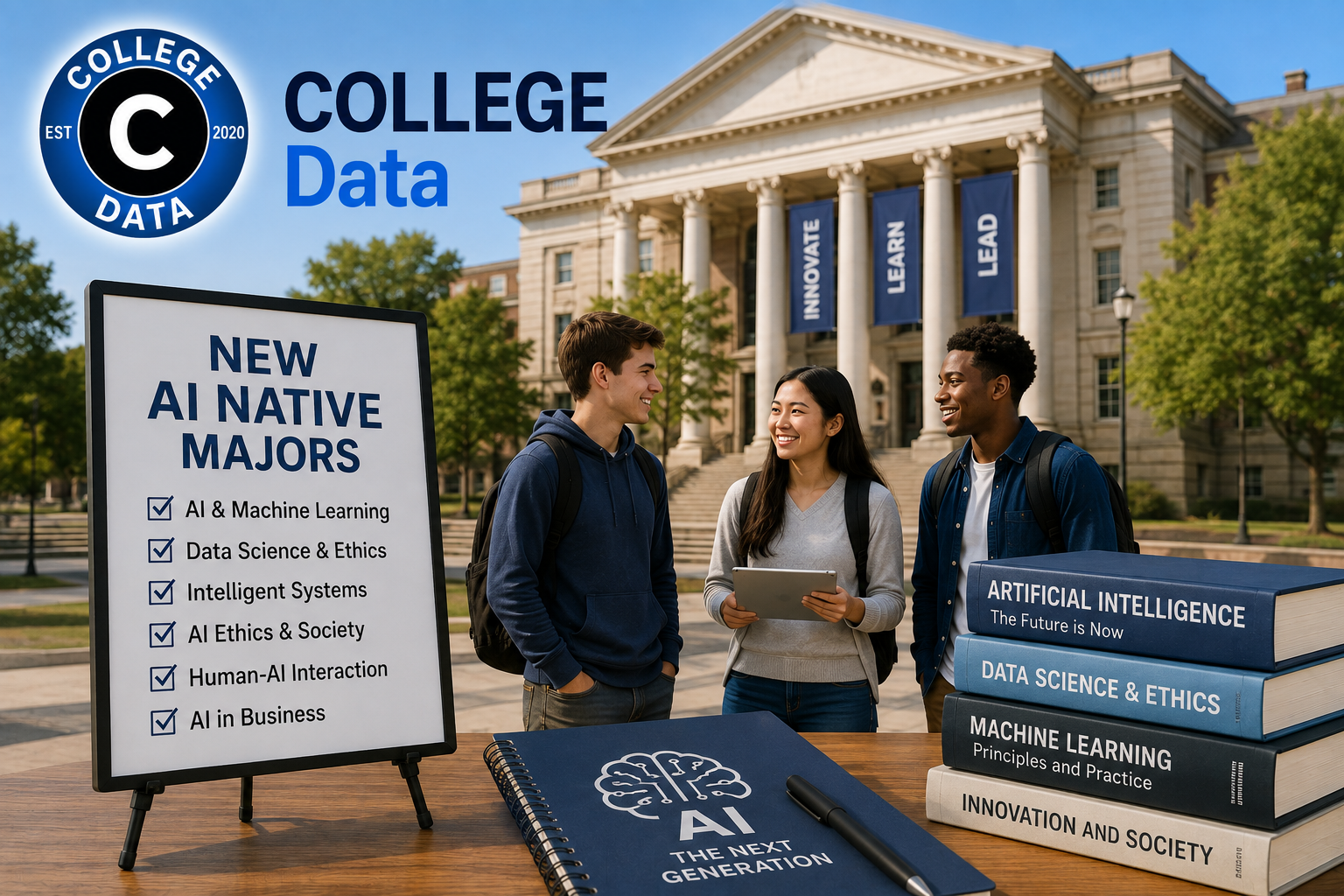
A genuinely forward-looking curricular shift is playing out across higher education right now. Boston-area colleges are looking to make students "AI natives" with entirely new majors built specifically around AI fluency, rather than simply integrating AI literacy as a supplementary skill within existing degree programs. This represents institutions moving beyond the reactive, defensive posture that has characterized much of higher education's initial response to generative AI, into genuine curricular innovation designed to meet employer demand for graduates with deep, structured AI competency.
For admissions and marketing leadership, this creates real, immediate opportunity to attract prospective students specifically seeking this kind of forward-looking credential, provided institutions can market these new programs effectively before the current early-mover advantage narrows as more institutions launch comparable offerings.
Rather than treating AI competency as a skill layered onto existing majors through elective coursework or certificate add-ons, institutions building genuine AI native majors are designing curricula from the ground up around deep AI fluency, combining technical AI literacy with domain-specific application across fields where employers increasingly expect graduates to demonstrate genuine, structured competency rather than surface-level familiarity gained through occasional coursework exposure.
This approach reflects genuine confidence that AI fluency represents a durable, foundational competency worth building an entire degree program around, rather than a temporary skill trend better addressed through lighter-touch curricular additions. Institutions making this investment are betting that employer demand for genuinely AI-native graduates will continue growing considerably, justifying the substantial curriculum development investment a full new major requires relative to simpler certificate or elective-based approaches.
Prospective students and their families evaluating college options are increasingly asking direct questions about how a given institution is preparing graduates for an AI-integrated workforce, and institutions with genuinely differentiated AI native major offerings have a real, concrete answer considerably more compelling than generic claims about AI literacy integration across the broader curriculum. This creates genuine competitive advantage for early-moving institutions, provided their admissions and marketing offices can communicate this differentiation effectively to prospective students actively researching exactly this kind of program distinction.
"Boston-area Colleges Are Looking to Make Students 'AI Natives' With New Majors."
This urgency is time-sensitive specifically because the current early-mover advantage will likely narrow as more institutions develop comparable programs over the coming admissions cycles, meaning institutions building genuine AI native majors right now have a meaningful window to establish market position before this kind of program becomes a more standard offering across higher education broadly.
Admissions offices marketing new AI native majors need to communicate genuine specificity about what makes these programs different from simply taking a few AI-related electives within a traditional major, since prospective students and families increasingly have some baseline AI literacy themselves and can recognize marketing language that oversells a program's actual depth and rigor. Effective marketing requires genuine, concrete detail about curriculum structure, specific technical and domain competencies students will develop, and, ideally, genuine evidence of employer interest or partnership validating the program's real workforce relevance.
This kind of substantive marketing requires genuine coordination between admissions marketing staff and the academic faculty actually designing these new programs, ensuring marketing materials accurately reflect program depth and avoid the kind of generic AI marketing language that has become common enough across higher education that discerning prospective students may reasonably discount claims lacking genuine specificity and substance.
Institutions with genuine existing strength in computer science, data science, or related technical fields are positioned to build AI native majors with real academic credibility and faculty expertise already in place, giving these institutions a meaningfully stronger starting position than institutions attempting to build this kind of program without comparable existing technical faculty depth. Institutions without this existing strength face genuine risk in rushing to market an AI native major without the underlying academic substance to support it credibly, a mismatch prospective students and, eventually, employers evaluating graduates will likely recognize.
Smaller and regional institutions without extensive existing technical program infrastructure should consider whether a more modest, genuinely well-executed AI concentration within an existing major might serve prospective students and the institution's own credibility better than an ambitiously marketed but under-resourced standalone major that cannot deliver the depth its marketing implies.
Consider a prospective student choosing between two similarly ranked institutions, one offering a traditional computer science major with several AI-related elective options, and another offering a genuine AI native major built specifically around integrating AI fluency throughout the entire curriculum from foundational coursework through capstone projects. For a student and family genuinely prioritizing AI competency as a career differentiator, this second institution offers a considerably clearer, more compelling value proposition, provided the institution's marketing can actually convey the program's genuine depth and structure rather than relying on general AI-adjacent language that could apply equally to either institution's offering.
This scenario illustrates precisely why marketing execution matters as much as the underlying program design itself. An institution with genuinely superior curriculum design that fails to communicate this differentiation effectively in its admissions marketing risks losing prospective students to competitors with less substantive programs but more compelling, specific marketing messaging, an outcome that serves neither the institution nor ultimately the student who might have been better served by the more rigorous but less effectively marketed option.
Institutions building genuine credibility for new AI native majors should invest directly in employer partnership development alongside curriculum design itself, since concrete evidence of employer interest, whether through internship partnerships, advisory board participation, or documented hiring interest specifically in graduates of this new program type, provides considerably more persuasive marketing material than curriculum descriptions alone. Prospective students and families increasingly want genuine evidence that a new program type will actually translate into real career outcomes, not simply an institution's own confident claims about the program's value.
Institutions that build these employer relationships proactively, before or alongside their first graduating cohorts, position themselves to market with genuine outcome evidence considerably sooner than institutions that wait until after early graduates have already entered the workforce to begin building this kind of employer validation. This proactive approach to employer partnership development represents a genuine competitive advantage in marketing credibility that pure curriculum design alone cannot fully provide.
This dynamic, institutions building genuinely new capability to meet emerging demand, is showing up across sectors this year. K-12 districts are seeing genuine progress too, since K-12 ransomware attacks just dropped 26 percent, while higher education attacks keep climbing. Healthcare organizations can find useful terminology grounding directly too, and Physician Data's glossary offers context for exactly this kind of legislative opportunity.
Government agencies are managing a related coordination challenge too, since new AI-specific procurement requirements are pulling a much wider group of stakeholders into technology purchasing decisions that used to sit with a smaller team. And K-12 hiring reflects a related structural pressure too, since new federal loan changes are deepening the teacher shortage right when districts need more candidates, not fewer.
Institutions building genuine AI native majors represent a meaningful curricular investment with real, near-term marketing opportunity for admissions offices able to communicate program depth and specificity effectively. Institutions moving quickly, with genuine academic substance behind their marketing, are positioned to capture real enrollment advantage during the current early-mover window, while institutions overselling program depth without matching substance risk credibility damage as prospective students and employers evaluate these programs' genuine value over time.
Ready to reach the admissions leaders marketing these forward-looking programs? Build a higher education marketing database, or buy a college email list, with College Data today.




 0
0
POST A COMMENT