

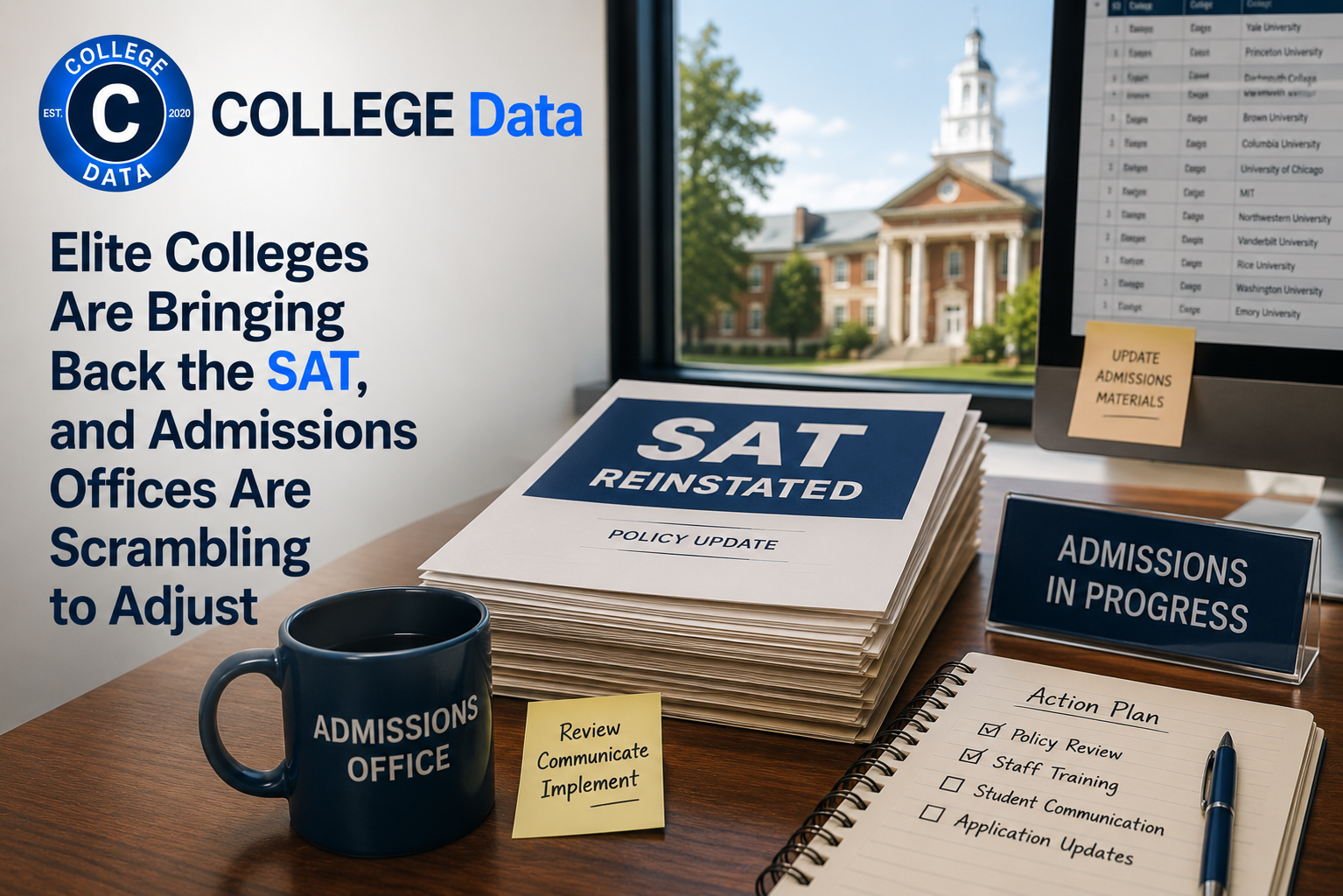
After years of test-optional admissions policy adopted broadly across higher education, a growing list of elite institutions is reversing course and reinstating standardized testing requirements for students enrolling next fall. This is a genuinely significant reversal, not a minor policy tweak, and it is forcing admissions offices to rebuild evaluation processes, communication strategy, and applicant guidance considerably faster than the multi-year timeline institutions typically use for major admissions policy changes.
For admissions leadership at institutions still deciding whether to follow this trend, and for those already committed to reinstating testing requirements, this represents genuine, near-term operational urgency requiring real, immediate attention.
The test-optional movement, accelerated considerably during the pandemic era, was built around genuine equity concerns about standardized testing's correlation with family income and access to test preparation resources. Institutions reinstating testing requirements are generally citing research suggesting test scores provide genuinely useful predictive value for academic success that test-optional admissions processes have struggled to fully replace through other application components alone, alongside genuine practical challenges evaluating an increasingly large and varied applicant pool without a standardized comparison point.
This reversal does not mean the underlying equity concerns that drove test-optional adoption have disappeared. It means institutions are recalibrating how they weigh those concerns against other institutional priorities, a genuinely contested judgment call playing out differently across different institutions even within the same reinstatement trend.
Admissions offices reinstating testing requirements need to rebuild evaluation rubrics and staff training considerably faster than institutions typically prefer for major process changes, since the reinstatement affects the current application cycle directly rather than allowing a multi-year transition period. This creates genuine operational pressure on admissions staff who may have built their entire evaluation approach around test-optional criteria over the past several years and now need to reintegrate testing into that evaluation process quickly and consistently.
"Higher Ed Dive covers colleges and universities announcing they will reintroduce standardized testing requirements for students enrolling next fall."
This also requires genuine coordination with communications and marketing teams, since prospective students and families need clear, timely guidance about the changed requirement, particularly students already deep into standardized test preparation planning built around the assumption that testing would remain optional.
Prospective students currently planning their application strategy need to understand this change immediately, not after they have already made testing decisions based on outdated institutional policy. Institutions reinstating requirements need genuinely proactive, multi-channel communication reaching prospective students directly, not simply updating a website policy page and assuming applicants will discover the change through their own research.
This urgency is particularly acute for students from backgrounds with less access to college counseling resources that might otherwise catch this kind of policy change quickly, meaning institutions have a genuine equity responsibility to communicate this shift broadly and clearly, not simply to the most well-resourced prospective applicants already deeply engaged with a given institution's admissions communications.
Institutions with the largest and most competitive applicant pools face the most acute version of this operational challenge, since these are precisely the institutions where evaluating a large volume of applications without a standardized comparison point has created the most significant practical strain on admissions staff capacity. Institutions reinstating requirements later than early movers in this trend also face a genuine communication challenge, needing to clearly differentiate their own timeline and requirements from peer institutions that may have already reinstated testing on a different schedule, avoiding prospective student confusion about which specific institutions require what by when.
Consider a high-achieving high school junior who, based on an institution's test-optional policy at the time she began researching colleges, deliberately chose not to prioritize SAT preparation, instead focusing time on extracurricular leadership and a strong personal essay. When her target institution reinstates testing requirements mid-way through her application planning, she faces a genuinely stressful scramble to prepare for and take the exam on a compressed timeline, a scenario playing out for thousands of students nationally as this reversal trend accelerates faster than most families anticipated when planning their college search process.
Institutions reinstating requirements owe these students genuinely clear communication and reasonable transition accommodations, whether extended testing windows, superscore flexibility, or explicit guidance about how the reinstated requirement will actually be weighted during this specific transition cycle, rather than simply announcing the policy change and leaving students and families to guess at practical implementation details that carry real, immediate stakes for their application strategy.
This reversal creates genuine, immediate demand for test preparation services specifically targeting students who deprioritized testing under the assumption it would remain optional, a meaningfully different customer than the traditional test-prep audience that has always planned around testing as a required component. College counseling services, both school-based and independent, need genuinely current information about exactly which institutions have reinstated requirements and on what timeline, since giving students outdated guidance during this fast-moving policy shift could meaningfully harm their application strategy.
This is not the only sector navigating a genuine, fast-moving reversal of established policy this year. K-12 districts are facing a related legal and operational shift too, since districts suing social media platforms over youth mental health is reshaping who handles student wellness. Healthcare organizations can find useful terminology grounding directly too, and Physician Data's glossary offers context for exactly this kind of compressed timeline. Government agencies are managing a related coordination challenge too, since new AI-specific procurement requirements are pulling a much wider group of stakeholders into technology purchasing decisions that used to sit with a smaller team. And K-12 hiring reflects a related structural pressure too, since new federal loan changes are deepening the teacher shortage right when districts need more candidates, not fewer.
The return of standardized testing requirements at a growing number of elite institutions represents a genuine reversal admissions offices need to operationalize considerably faster than institutions typically prefer for major policy changes. Institutions communicating this shift clearly and proactively to prospective students, while rebuilding evaluation processes to reintegrate testing consistently, are positioned to navigate this reversal considerably more smoothly than institutions treating it as a simple website update rather than the genuine operational shift it actually represents.
Ready to reach the admissions leaders navigating this policy reversal? Build a higher education marketing database, or buy a college email list, with College Data today.




 0
0
POST A COMMENT